
Mass deportations

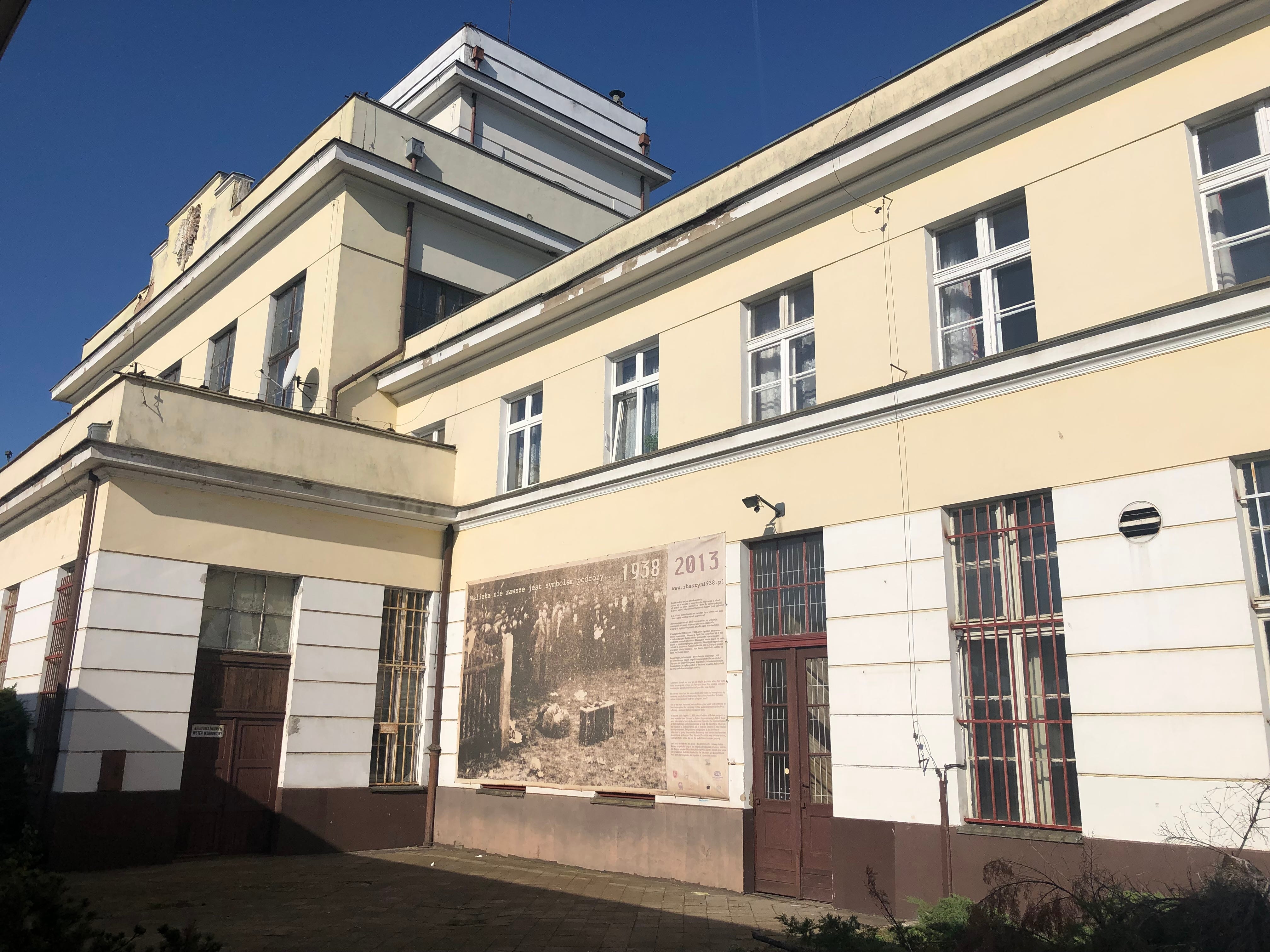
I’ve been thinking a lot about Rosa Friedfertig in the last couple of weeks. One day in autumn 1938, the police came to her door and she was put on a train. She was dumped in the Polish border town of Zbąszyń, a place she did not know and was not allowed to leave for weeks. Her deportation was wrenching, miserable and humiliating. And somehow, we have ended up in a place where people in a wealthy country with old democratic institutions cheer for the infliction of similar misery on millions of their fellow human beings.
Rosa was caught up in a deportation operation in Germany called the Polenaktion. Its immediate origins were complicated but its ultimate origin – anti-Semitism – was not. In March 1938 the Polish parliament passed legislation enabling the deprivation of citizenship from Poles who had been living outside the national territory for five years since 1919, which was intended primarily to prevent Polish Jews resident abroad from moving to Poland. In October the Polish government announced that passports of overseas Poles would need a special stamp by 30 October to remain valid; Jews found that consulates were unwilling to give them the stamp and they were effectively rendered stateless. The Nazi regime in Germany was at this stage proceeding with some semblance of respect for legal procedures and its policies were aimed at discrimination and encouragement of emigration rather than mass murder. The German response to the new Polish law was to invalidate their residence permits and deport them across the border into Poland before they became officially stateless persons.
I’ll let Rosa Friedfertig tell most of the story of the deportation.[1] She was a middle-class Jewish woman who was deported from her home in the Altona area of Hamburg because her family were Polish by citizenship, despite her own culture and language being German. The first she knew of it was when two police officers knocked on the door a little after 5am and asked for the head of the household to come with them. Interestingly, these Hamburg cops seemed to have little enthusiasm for their mission and although they were expected to arrest her too, they did not bother. It was only later, when Rosa tried to find her husband at the detention centre in Hamburg, that she and her two younger daughters were swept into the round-up and put on an eastbound train. The train was a normal passenger train, crowded but not squalid.
The train left at approximately 5.30 in the evening and the next morning at 5 we arrived in Bentschen. There we all had to get off the train where we were searched for money, where several people, one after the other, were frisked by the officers. The searches were not done very thoroughly though, for example I was able to hold on to several hundred Marks on my person. Then began a dreadful march of approximately 7km which we were forced to do with no consideration for the physical capability of individuals. Those who were unable to carry their luggage or who hung back, their luggage was taken off them and thrown away. Those who didn’t fall into line were beaten. Then we came to the border. There, there is approximately 100m of No Man’s Land on both sides. On the Polish side stood a single officer with weapon loaded. He wanted to let no one through. The Germans insisted, however. The Germans pushed us and forced us forward, saying ‘you’re not going to let one man on his own hold you up!’
After this a few young people formed a chain, passed under the barrier and called to us. Then from the Polish side, rounds were shot into the air but as the crowd was pushing forward and had already lifted the barrier in the air it transpired that the whole trainload got to the Polish side.
In the meantime, somehow negotiations happened and everyone then came to a little wood situated on the Polish side where everyone sat down, completely exhausted. We ate such food as people had on them etc. From approximately 10 to 1 o’clock we were in the wood in the rain. Then came the permission from the Polish government to let us into Sponczyn [Zbąszyń]. We could thus set off again and there, horse stables were made available for us, which coincidentally happened to be empty. We were ordered in there. We were allocated space in there as well as could be managed. Other people from other towns were already there from arriving on previous days. The Neu Bentschen station was already swarming with people who were there from the previous days. The first 20-30 were able to travel on further after which onward travel was completely forbidden. There was no further room for anybody at the station because it was completely overcrowded. We stayed overnight in the stable, or more accurately put, we started to spend the night there. My husband stayed downstairs and I climbed up with my two daughters to the living quarters upstairs because it seemed to be warmer up there.
After this though other people lit fires [for warmth, illumination] and the danger of fire was too great for us and we came back downstairs again. In the meantime, my youngest daughter was very sick and I went outside with both daughters. There, the oldest daughter also collapsed. And then I felt around in pitch darkness for any kind of help and shelter. I heard voices and saw a light and finally found an inn. I entered a smoke-filled room where several refugees were. The children who kept fainting were immediately placed on two chairs and we were given hot coffee. Here by chance an acquaintance from Duisburg recognised me, who had yesterday taken a room in this hotel. He said that unfortunately there was no space in his room, because he had his two children in there and his wife was lying down sick as well. But next to his room there was another one free because the occupant of that room had gone away for the night. And then I answered, completely still in my old frame of mind, that I couldn’t possibly spend the night in a strange room. He however said that had nothing to do with it now. Then he opened the room with a key that conveniently fitted it and we found a wonderful room with a tiled stove, electric light, two big beds etc. I laid the children in the beds and then I went off in search of milk. I subsequently found a farmstead and asked if I could have some milk. They even warmed it up for me and I brought the milk back to the guest house. When I got back the children had got a bit better.
The [refugee] shelter was such that everyone had to sort out their own accommodation in various places and would also have to pay for it. People weren’t gathered together in a camp as such but instead were accommodated by individual people in the town. However, the whole place was cordoned off by the police and none of us were able to leave. Those who hadn’t got any money either stayed in the stables or in a reception centre that was established in two mills. On the second day, big lorries arrived with food from the Jewish areas in Poland, who distributed bread, butter and eggs. Gradually, order was established and committees were formed, and representatives from organisations in Warsaw arrived. The leader was Professor Ginsburg. After this the committee took over the payment of various housing costs. Open air kitchens were established and articles of winter clothing arrived. Naturally it took quite a time until the distribution was properly organised. We couldn’t stomach the food from the field kitchens but as we still had some money we were able to negotiate the essentials for ourselves.
The Friedfertig family were among thousands of deportees at Zbąszyń – records are poor but the main estimate is that there were 6,000 or so there, plus another 6,000 or so at the Beuthen/ Bytom border crossing in Upper Silesia and elsewhere. There could have been more had the original plan been fully carried out.
As Rosa’s testimony establishes, the conditions were chaotic and the Polish authorities were initially little help as they were not keen to take in thousands of Jews who had been plundered of their possessions on their way out of Germany. The authorities closed Zbąszyń town on 31 October, to keep the deportees close to the border and preserve the international status of the incident. Polish Jewish civil society rallied round and most of the aid that the deportees received came from that source.[2] Eventually they were allowed to resettle in what had supposedly been their home country all along. A handful of them, among them the Friedfertig family, were issued permits to emigrate to Palestine. In January 1939 Germany and Poland agreed to allow the deportees short visits back to Germany to wind up their affairs (although most of the money resulting from that was confiscated by the Nazis).
The mechanics of persecution crossed two border lines at Zbąszyń. One was that it was the first time the Nazis had actually deported Jews from Germany, rather than making their lives gradually more miserable and bullying them to leave. Though the deportations themselves were callous and an abuse of human rights there was a sort of legal basis for them. This veneer was quickly dispensed with and within a fortnight there was open state criminality. Rosa Friedfertig is not the most famous Zbąszyń deportee of the Polenaktion; that distinction goes to the parents of Herschel Grynszpan, himself a refugee in Paris. Enraged by the misery of their conditions, and possibly motivated by other personal factors, Grynszpan shot an official, Ernst vom Rath, at the German Embassy in Paris. The Nazi regime responded with an officially-licensed pogrom which is known to history as Kristallnacht.
The Polenaktion is, largely thanks to Grynszpan, known to history as a cruel disgrace. There are memorials, including Stolpersteine by the places from which some of the deportees were ejected. But it involved only around 17,000 people rather than millions, and was more or less legal. No doubt many Germans at the time felt it was a good thing, and didn’t care about the way the deportees were treated. Once you start talking about mass deportation, you are dehumanising its victims, disregarding individual experiences like Rosa’s and on a slippery slope to a dark place where the rule of law does not apply.
[1] Her testimony was recorded in Palestine in November 1944 and is now part of the archive of Yad Vashem: Item 3549180, Ball-Kaduri collection O.1 Yad Vashem ‘Collection of Testimonies and Reports from German Jewry’. Translation from German to English by Hannah Nicholson.
[2] https://sztetl.org.pl/en/towns/z/779-zbaszyn/99-history/138313-history-of-community